Showing posts with label 2000. Show all posts

Friday, November 11, 2016

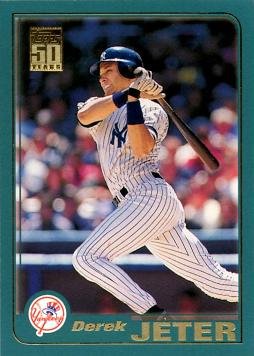
4 years of Derek Jeter a retrospective


Now that we have 4 seasons of history to look at in the Millennium League (MBL) I thought it might be interesting to take a look at how one players real life stats compared with our Dynasty league. When I came up with this idea for a post I knew right away that I didn't want it to be a player that I have owned on my team, or that I really liked when said player played. I thought for a while and Derek Jeter's name kept popping in my head. For some reason for me Jeter never was one of those stand out players for me. Everyone seemed to love him, specially Yankee fans, but to me he was just a shortstop on the "Evil Empire" Yankees squad. We are not really here to debate whether or not Jeter was any good when he played. We are here to compare real life vs Dynasty life.

Mike C the creator of the crazy baseball simulator we all love to hate, and love again, prides his game to be one of the most realistic baseball games on the market. He goes through each player stats and puts outcomes based on dice rolls 0-999. He has done this for many years, and we always wonder if he got it right when our big bopper clutch player comes to the plate only to strikeout. When asked Mike and any other stat head with say "meh, small sample, it happens."

Image result for 2000 derek jeter baseball card

Real LifeGABRH2B3BHRRBIBBSOSBCSBAOBPSLG
2000148593119201314157368992240.3390.4160.481

Dyansty GABRH2B3BHRRBIBBSOSBCSBAOBPSLG
20001606811092203461580751341860.3230.3940.457

2000 season Dynasty's 1st year. Boy if I only knew what I knew now. Anyway, Jeter was taken #9 in the first round of the 2000 draft by the Minnesota Millers. Derek had more Runs, and more stolen bases in real life than his Dynasty counterpart. However, Jeter played 12 more games in Dynasty than real life, and those 12 games show up in his numbers in Dynasty. AB's (+88), hits(+10), doubles(+3), triples(+2), RBI's(+7), walks(+7), and strikeouts(+35).  While Jeters numbers for the most part went up, he became a less efficient card for Walt. His AVG was down, OBP down, and SLG down. I would have to say to have gotten the most out of Jeter that year Walt should have maybe sat Jeter more than playing in 160 games. I'm not crying for Walt as Jeter had a fine year in the MBL, I'm just pointing out that due to his increased usage his numbers fell. I'm thinking Jeter must of had some small injury that year in real life hence the "C" injury rating on his card.

Conclusion: UNDER PREFORM CARD


2001

Image result for derek jeter 2001 baseball card

Real LifeGABRH2B3BHRRBIBBSOSBCSBAOBPSLG
2001150614110191353217456992730.3110.3770.480

Dyansty GABRH2B3BHRRBIBBSOSBCSBAOBPSLG
20011596561062004871675581372690.3050.3710.473

2001 our second season. Walt got his wish and got to draft the mighty Albert Poljos for his squad with the number one pick overall. As the 2001 season got under way Jeter was having a horrible start only hitting .169 in 21 games. That was enough for Walt to pull the trigger and send Jetter packing to NY and the Bombers. Jetter played 84 games for the Bombers when "Crazy Trading" Larry sent him to the land of misfit toys Milwaukee. Where Jeter still resides to this day. Jeter had more AB's, Hits, Doubles, Triples, RBI's, Walks, and Strikeouts in Dynasty than in real life. This time Jeter only had 9 more games played in Dynasty than in real life. However, Jeter's card did not live up to expectations again it the AVG, OBP, and SLG categories. Only 2 more walks in Dynasty than real life (hurt the OBP), and looking at how many more doubles he had in Dynasty I thought for sure his SLG would have been greater in Dynasty. Again all 3 stats were worse than his card.

Conclusion: UNDER PREFORMING CARD
Image result for derek jeter 2002 baseball card

Real LifeGABRH2B3BHRRBIBBSOSBCSBAOBPSLG
20021576441241912601875731143230.2970.3730.421
Dyansty GABRH2B3BHRRBIBBSOSBCSBAOBPSLG
200216166211217323011537213743140.2610.3390.346

2002: Things were not good for Jeter in Milwaukee in 2002. Not much on the roster at that time could him him and his numbers. However, this is where Dynasty has it's doubters. While his numbers were down across the board his AVG and OBP really stand out to me. Those are not numbers depending on who is on base or who is behind them in the order. Jeters average plummeted to .261 from real life number of .297. That is a big drop! He also struckout a heck of a lot more with 137 K's on the year. Looking at the card and seeing the 2002 season results Mike C must have screwed up this card, bad.

Conclusion: WAY UNDER PREFORMING CARD


Image result for derek jeter 2003 baseball card


Real LifeGABRH2B3BHRRBIBBSOSBCSBAOBPSLG
200311948287156253105243881150.3240.3930.450
Dyansty GABRH2B3BHRRBIBBSOSBCSBAOBPSLG
20031426031091843141453431371260.3050.3660.439

On to the last year of 2003.

This is another year where Jeter played in a lot more games in Dynasty than in real life (142-119). So, all his individual numbers may look higher than real life, but Jeter was worse in the averages department. What did I really learn about do this exercise? Jeter is a strikeout monster. and in Dynasty that shows up all the time. Jeter's average while over .300 for the Dynasty league was down almost 20 points from real life, also his OBP was down almost 30 points. 

Conclusion: ANOTHER UNDER PERFORMING CARD   

While some of Jeters individual numbers were close to the real life numbers that Jeter put up, his averages were way off and down. When I look at my team the Stonecutters I get impatient. What have you done for me lately syndrome. I was hoping by doing this post it would teach me to be more patient when evaluating players. Now it just makes me think that long time players with good stats through out their career are going to under preform. It was my case with Scott Rolen, now Jason Kendall, and a few others. If I can get the player to perform close to their real life numbers I'm a happy man. It's get frustrating when they don't produce those number over a season.  

Let me know over email or in the comments below what players you feel fit in this situation for your team or you've noticed on someones team.  


Saturday, March 26, 2016

Guest Blog Post: Top 10 Games in MBL History.

Hey gang! Here is a great post of the top 10 games in the leagues history. I am proud that the Stonecutters got 1 game on the list. Shawn Green was a monster that year. Big thank you to our fearless leader Matt for putting together this awesome list of awesome. ~Craig

The 10 Greatest Games
What follows is a ranking of the ten greatest games (so far) in the history of the Millennium Baseball League. Read on to relive the drama!

Number One: Out at Home
Houston 6 Oakland 5 (16 innings)
In the 2001 playoffs, with a trip to the LCS on the line, the Houston Buffaloes had a 4-2 lead in the 9th inning of Game 7 only to see Cliff Floyd tie it up with a 2 run bomb. Things stayed knotted at 4 until the bottom of the 11th when Oakland’s Jason Giambi reached on an error. Cliff Floyd doubled to right and Giambi tried to sprint home with no outs only to be thrown out at the plate. In the bottom of the 15th Oakland nearly won it again. David Eckstein singled with one out to bring David Dellucci around third and, incredibly, he too was thrown out by the Buffaloes at home plate. Finally, in the 16th, Houston put across two runs on a Preston Wilson single. Up 6-4, Oakland made one last try. With one out they loaded the bases with Ron Gant coming to the plate. Gant hit a deep drive to right that brought home Giambi and cut the lead to one, but he had nearly hit a grand slam to win.  When Jorge Posada struck out to end the game, it was Houston that was moving on, eventually to a title.

Number Two: Stouts Go Down
In 2001, the Baltimore Stouts set the record at that time for most wins in a season at 116. They were expected to win a championship --- or at least get to the Series to face the Rippers. However, both teams ran into trouble in the divisional series. Baltimore and the Minnesota Millers were knotted at three games apiece, when the Millers and hurler Mark Mulder took a 1-0 lead to the bottom of the ninth at Camden Yards. But with Jeff Zimmerman trying to close things out for Minnesota, Alex Rodriguez homered to left to tie the game at 1-1.  And there the contest would sit until the 15th inning with neither team getting particularly close to taking Game 7.  In the top of the 15th, the Millers finally got to Felix Rodriguez. Steve Finley walked and Tim Salmon tripled him home. Raul Mondesi then singled to put Minnesota up 3-1.  In the bottom of the 15th, Baltimore got two runners on but Todd Helton struck out to end the game and the series. Minnesota had shocked the MBL world, upsetting the greatest team to date.

Number Three: Perfection
The only perfect game in MBL history was served up by Mike Mussina in 2000. Then pitching for the best regular season team of the inaugural campaign, Mussina would lead the San Francisco Quakers to a 3-0 win over Seattle in the middle of the year. Moose would face 27 batters and retire 27 batters, 9 by way of the K. Incidentally, the Lightning had a pretty good offensive club. Mussina had to retire Ken Griffey Jr., John Olerud, Javy Lopez, Glenallen Hill, Miguel Tejada and Chipper Jones on the way to perfection.

Number Four: Choke Job
In the 2000 Classic League Divisional Series, the Metro Division winning Boston Beaneaters went up against the Southeast Division champion Miami Panthers. Boston came in as the favorite and won the first two games at Fenway Park. But Miami would tie things up at 2-2 in Florida. Boston took Game 5 and Miami took Game 6, setting up a wild finish in Game 7. The Panthers rushed out to a 3-1 lead in the second inning but Boston would score a run in the 6th, 7th and 8th eventually tying the game 4-4 on a Ray Lankford homer in the bottom of the 8th inning. In the bottom of the 9th, Boston looked to put Miami away. Moises Alou singled and Ray Lankford doubled him to third with no outs. But three Beaners in a row made outs and sent the game to extra innings. In the bottom of the 10th, Boston again got runners on base. Eric Chavez and Mitch Meluskey reached base but Boston Classic League MVP Moises Alou grounded out. In the bottom of the 11th, the Beaneaters had Eli Marrero and Rich Garces on first and second but Eric Chavez flied out to give Miami another chance. They took advantage --- Fernando Seguignol pitch hit for pitcher Chris Peters and sent a fly ball past Pesky’s pole in right and into the crowd to give Miami the lead. Boston would again threaten in the bottom of the 12th, putting a runner on base but Alou would again ground out, ending Boston’s season and sending Miami on to play Cleveland.

Number Five: Comeback
In the 2002 season, the NY Bombers went on an incredible playoff run. Down 5-0 to Boston in the Wild Card in the 7th inning, the Bombers would come back to win 6-5. They put the 122 win New York Rippers away in the Divisional Series and then met the Washington Tribe in the LCS. In Game 6, up 3 games to 2, it looked like the series would be headed to a Game 7. Heading into the bottom of the 7th, the Tribe were coasting to an 11-0 lead with Jimmy Haynes on the mound. Then the roof caved in. With two outs in the 7th, the Bombers got a double from Karim Garcia and a Timo Perez three run homer to make it 11-4. But the Tribe still had a 7 run cushion with two innings to go and Willie Banks on the mound. The Bombers would load the bases with 1 out in the eighth, only to have Corey Koskie hit a grand slam to make it 11-8. The Bombers kept at it. A couple singles put runners on base with two outs and Jason Giambi singled home Karim Garica --- 11 to 9. In the 9th, Mariano Rivera took the hill to close out New York. But the Bombers had other plans. Two walks put runners on second and third with two outs and Garcia again at the center of the action. He singled off Rivera to bring home Tim Salmon and bring Koskie to third. Richard Hidalgo then hit a ground ball to shortstop Chris Woodward. With cold temperatures at Fenway making fielding more difficult, Woodward threw the ball away, tying the game. In the bottom of the 10th, the Bombers would win the series on a Corey Koskie single, delivering a devastating loss to the Tribe.

Number Six: Awesome
Shawn Green of the Atlanta Stonecutters had the best offensive game in MBL history in 2001 in a mid-season contest against the Colorado Briar Jumpers. On a way to a 24-5 route, Green would homer five times and drive in an incredible 14 runs. Batting cleanup for Atlanta, Green hit dingers in the 1st, 3rd, two in the 4th and the 8th inning to cap an unbelievable offensive performance.

Number Seven: Upset
By regular season record, the greatest MBL playoff upset came in the 2001 season when 90 win Atlanta took out the 111 win New York Rippers. Atlanta took games 1 and 2 only to get broadsided 22-12 in game 3. The Rippers took game 4 behind Curt Schilling but lost game 5. Up 3 games to 2, Atlanta was down 5-3 in the top of the ninth against the Rippers’ Freddy Garcia. But Gary Sheffield would walk to lead off the inning and then Shawn Green homered to tie things up. The Rippers got men to second and third in the bottom of the frame but Ruben Rivera struck out. Finally, in the top of the 12th, Shawn Green would again be the Stonecutters’ hero when he singled in two runs to give Atlanta a 7-5 lead which would carry them into the LCS.

Number Eight: Comeback
In 2000, the Milwaukee Phantoms seemed to be running away with the Continental Division. As they pushed their mid-season lead to 10 games, there were some who questioned whether they could hold it. With a poor run differential, they were leading the unluckiest team in the league, the Baltimore Stouts. Baltimore continued to make deals, helped to sure up their bullpen and started their comeback. In late September they finally caught Milwaukee and then took a lead. Trying to clinch the division in a head to head game, Baltimore would do it in style with Jamey Wright on the mound. Wright would end up no-hitting the Phantoms to win the division for Balimore, going 9 innings, walking 5 and winning the clincher 4-0.

Number Nine: Offensive Explosion
The 2000 season saw more overall offense in the MBL then we have seen in the last few years. Case in point was one series between Boston and Cincinnati in August. As temperatures heated up at Fenway Park, so did the bats. Cincy took Game One by a score of 25-5. Boston took Game Two 16-2 and the rubber match went to the Beaners 14-10. A total of 72 runs scored in a three game series. In that first game, Tom Glavine managed to give up 10 earned runs and Eddie Guardado 11, while Mike Piazza had 10 RBI for the Red Stockings.

Number Ten: Game 7
World Series Game 7s are always special and we had one in our first season. Colorado and Miami, both dark horses to reach the finals, met in the final game of the inaugural campaign. The Briar Jumpers would send Greg Maddux to the hill at Marlins Park and he would lead the way, allowing just 4 hits and in a nine inning shutout to take the game 4-0 and give the MBL its first champion.

Saturday, January 30, 2016

Guest blog post: A look back at the Beaneaters 2000 draft.

Craig: This is awesome, another guest blog post, this time from our fearless leader Matt. Thank you again to Steve for breaking the ice, and now Matt for this insightful post. If you have an idea for a post type it out and email it me, I would love to post it here. I really think these posts bring a lot to our league.  Without further ado, here's Matt...


Hi everyone,
Steve’s project in which he looked back at Oakland’s 2000 Inaugural Draft inspired me to do the same. I couldn’t even remember what order many of the Beaneaters players were picked in, so it was fun to relive this draft two years later and see how my picks did. Not sure if others will have much interest but at least it was fun for me to think back and explore how the current team was assembled.

Draft Strategy:
My draft strategy, if there was one at all, was to consider the Steroid Era. It seemed at the time that it was likely that big hitting first baseman and corner outfielders would be easy to find. Having been trained in Moneyball thinking, I wasn’t interested much in defense and speed except if it came with other qualities. It seemed likely that starting pitching would be at a premium so my thought was to pick 3 or 4 long-term starting pitchers to assemble the team around and then add some good Moneyball type hitters to get runs across the plate.
Unfortunately, my plans were thrown off a bit by the lefty bias in Dynasty that I’m sure we now all know too well. I ended up choosing three lefty starters in the early rounds not knowing that the deck was a bit stacked against them, but in the end, it seemed to work out ok for the Boston franchise as we were able to deal two of them for key pieces in the 02-05 seasons.
The other part of my strategy was to draft with both the 2000 season and future years in mind. I wanted to assemble a team for the long haul but I was hoping to win at least 90 games in year one. It seemed smart to do what Steve and Walt and Thomas and others did and suffer through a tough first year to build a great team for the future. But honestly, I didn’t even know if our league would last more than a year and I couldn’t bear to sit through a lot of losing. So with that I went into the 2000 Draft:

Round One:
Boston was chosen to draft 23 out of 24. There was a lot of talk after this initial lottery that the Bombers and Brooklyn and other teams near the top had too much of advantage in being able to take ARod and the Big Unit and the other premier players. I was never worried about this though. My strategy was to build a balanced club and thus, having pick 23 and 25 (the first year was a snake draft) rather than say #1 and #48 seemed fine to me. At 23, I looked to take the best starting pitcher available, preferably someone who could help in 2000 but who would be good for many years. Roger Clemens was taken at #17 and interestingly the next 5 picks were all hitters (including St. Louis’ odd choice of the F durability and aging Mark McGwire at 22). That left Tim Hudson on the board at 23 and so he became the first Beaneater. Hudson did go 14-8 with a 4.21 ERA (his +3 hold rating was helped when I acquired Eli Marrero for a 5th rounder from Seattle with his -3 arm) in 2000 and won the Cy Young at 21-5, 2.83 ERA in 2001. He has an ERA in the 3.00s in 2002 and I’m hoping for a big year from him in 2003. Overall, I’ve been pretty satisfied with Huddy as our #1.

Round Two:
The Senators had back to back picks at the turn and with #25 took Barry Zito, who I had penciled in as Beaneater #2. Without Zito on the board, we went with half-of-famer Tom Glavine as the next best starting pitcher available. This pick I regret deeply. Al Leiter and Bartolo Colon went soon after and these picks or perhaps Javier Vasquez (who went to Oakland) would have been wiser. Glavine was left-handed and had a dreadful year as Boston’s ace in 2000 pitching in Fenway. He ended with the odd record of 17-15 in year one with an ERA just under 5.00, overall a disappointment. In 2001, his ERA was over 5.00 pitching in old Yankee Stadium. Anxious to deal off my southpaw starters, I traded him to Houston in the ’01 offseason for Carlos Guillen and a #5 pick. I felt I had enough pitching for ’02 and sure enough Glavine has underperformed again. He had an ERA in the 2.00s in 2002 but in the Millennium League he has pitched for three teams and has a 4.38 ERA. Hopefully all’s well that end’s well for Boston. Guillen has a monster ’04 season coming and I feel he could win a Classic MVP as a big-hitting shortstop with some other prime years to follow.

Round Three:
As the draft came back around to us at the bottom of Round 3 and top of Round 4, the plan was to pick one big bat and then another starting pitcher. We took Moises Alou as the third pick. Alou’s defense was pretty dreadful but he had big seasons in 2000 and 2001 and then some more down the line. At the time, I had not devised a strategy of picking left-handed bats and Alou seemed the best of the power-hitters available. Plus if we were going to compete in 2000, we needed a player with a big year. Looking back I think it was a decent choice. Moises hit .374-41-138 in 2000 and won the Classic League MVP, although he was dreadful in a playoff loss to Miami. He had another strong year in ’01. This past year, riding the pine, I dealt him to San Diego for a #2 and #4 pick. He was a hard guy to trade as no player symbolized the Beaners more than Moises but hopefully he can help the Vipers when he has a big year in 04 and again in 05. I’m hoping to use the picks for pitching.

Round Four:
Two picks later we again looked for a strong pitcher. Again not knowing of a lefty bias, Jamie Moyer seemed like a good pick. I liked his reverse splits and while he was poor in 2000, he had strong years in 01, 02 and 03. He has indeed performed well in 2002, currently 12-3 with a 2.48 ERA and an outside shot at a Cy Young. Not bad for a lefty. Livan Hernandez, Kerry Wood, Ryan Dempster are all guys who went shortly after them. Maybe Wood could have been the better choice but I do like Moyer’s longevity.

Round Five:
As the draft came back to Boston, I needed another big hitter and at the time Raffy Palmeiro seemed a good choice. However, as the season started and I acquired Ryan Klesko in that famously controversial trade with the Sliders, it freed up Palmeiro to be dealt. I sent him to Toronto along with third baseman Herbert Perry (round 9) for Tony Graffanino and Eric Chavez. This deal, only the second I ever made, is still probably the biggest in Beaner history. I am always too scared to trade big name players and I thought long and hard about this one. Overall, I’m happy I did it. Chavez is a good Dynasty player. He  plays a position that is hard to find (3B) and rakes against righties. I have been able to find guys to fill in against lefties and play third base, letting Chavez to usually slug over .500 against righties and bring A range defense. Palmeiro is a slugger but Chavez also has more years and should be a vital part of Boston’s team until ’06 or ’07.

Round Six:
Back for more pitching I unknowingly took another southpaw in Round 6, Jarrod Washburn. With an F durability in 2000 and a long career ahead of him, I was hoping I might sneak him through to a good year 2000 and then have him through the years. It didn’t work out as he went down for the season in an early season game in 2000 against Minnesota but he was OK in 2001. We were able to acquire Oslvado Fernandez as his replacement in 2000 from Houston for a 3rd round pick. Osvaldo pitched very well as a #3 starter and then we dealt him at the break to Cincinnati for a #1 pick (who eventually became Ben Sheets). Meanwhile, Washburn pitched for Boston in 2001 and then was dealt to Baltimore in a big deal at the end of the season: Jarrod and a 3rd and 4th rounder for Larry Walker. That deal rivaled the Chavez-Palmeiro deal for the biggest in our history and we will have to see how it plays out. Walker is having a big year in 2001 for us but Washburn has also pitched pretty well for the Stouts and has a longer career than Walker.

Round Seven:
The Geoff Jenkins pick in the seventh may have been our best pick of the draft. Here is a guy who played most of his career in Milwaukee and was never seen as a superstar. Like Brian Giles of the Pirates, I felt like he was underrated and a bit of a steal in the 7th. In 2000, he hit .301 with 33 homers and 125 RBI plus good defense, earning him a spot on the All-Star team. He does strike out a ton and doesn’t hit lefties well but these problems, especially the latter, don’t seem like major subtractions to me. In 01 and 02, he is an injury prone reserve (although we have avoided getting him hurt) but he should come back with monster seasons in 03 and 04 and another good one in 05.

Round Eight:
Rick Reed completed the 5 man rotation for year one and I hoped he would give us reasonable pitching for a few years. As it turned out, we dealt him at the deadline in 2000 to Baltimore for Ricky Gutierrez, a #4 pick in 2001 and a #2 pick in 2002. This seemed reasonable at the time and still does. Gutierrez was our starting shortstop for most of 01 and then dealt at the deadline for a #3 pick to Pittsburgh (the pick was then used to acquire Larry Walker). Ironically, Reed has recently come back to Boston in a trade for Todd Zeile with Arizona. He gives up a ton of home runs to lefties in ’02 but playing in cavernous Griffith Stadium I figured we could work our way around this liability. This allowed us to move Ryan Franklin to Minnesota along with a pick to get Paul Quantrill, our closer in ’03.

Round Nine:
Here I was worried we’d be stuck without a third baseman in ’00 and rather unwisely took Herbert Perry, a mediocre player with a short future. We were probably fortunate to include him in the deal to get Chavez with Toronto. Not a good pick though as much better players Jacque Jones, Arthur Rhodes and others were available.

Round Ten:
Needing a second baseman for 2000, we took Jerry Hairston, another unfortunate pick. Hairston was a reasonable second baseman in 00, hitting .257 with a .350 OBP but we could have looked toward the future here. In these middle rounds it was hard to try to complete in 2000 while also making strong picks. I think we did better though in trading Hairston and Jay Payton (later acquired in the Bob Wickman deal with the Rippers) for Latroy Hawkins who is probably our most valuable pitcher on the 2002 squad.

Round Eleven:
This pick for Adrian Brown worked out nicely. I had never heard of the Pirate centerfielder, but he was a strong one year player in 2000, hit and fielded very well for us and then was available to deal at the deadline to Baltimore for their #2 pick. Overall, a good conversion.

Round Twelve:
I took another one year player at #12, again looking toward the immediate future, choosing Donnie Wall, who became the Beaners superstar reliever. He ended up 17-7 in 2000 and finished third in the Cy Young balloting. Again, it might have been wiser to play for the future here as Wall was not a keeper at the end of ’00 but at least we got our money’s worth as he was the team’s most important pitcher in the first campaign.

Round Thirteen and Fourteen:
Needing bullpen help for 2000, Boston took Rich Garces and Eddie Guardado. Neither of these rather rotund relievers ever pitched particularly well in Boston. Garces would end his career as a Beaneater in 01 and Guardado was dealt to Detroit after the 2000 season for a pick that would be used for Danys Baez. While Baez never reached his potential with Boston, he was an important part of the 01 season and was eventually dealt to Oakland for Matt Stairs, a big part of our plans for ’03.

Round Fifteen and Sixteen:
Bob Wickman added to Boston’s 2000 bullpen. He was dealt mid-season to the Rippers for Turk Wendall and Jay Payton. Tough deal to analyze. On the one hand Wickman went on in 2001 to have the greatest Millennium season for a reliever yet recorded (at least in terms of saves, 48). On the other hand, it was nice to close for that Ripper ballclub! Wendall was dealt to Arizona for a #3 pick (I believe it was) and Payton helped get Hawkins so it wasn’t all bad.

In Round 16, we took the oddest player to ever wear a Beaner uniform. Mitch Meluskey, a one year catcher, who could really hit but also had dreadful defense. I believe he had F range and was an F handling pitchers. He also had a temper and a +1 arm. Overall, he seemed worth it though. Teaming with Sandy Alomar, he played only vs. righties and hit .336 with 14 homers and 60 RBI in 265 at bats to finish second in Rookie of the Year balloting.

Rounds 17-20
In Round 17, we finally took a shortstop, Felix Martinez, a smooth fielding, weak hitting player that we dealt mid-year to Arizona for a #2 pick as Deivi Cruz seemed good enough despite weak range to take over the position. Filling in gaps we took Sandy Alomar to hit against lefties at the catcher spot platooning with Meluskey in year one and Deivi Cruz who raked lefties and survived righties at SS. The 20th pick went for Cliff Pollitte, an odd player who helped a bit as a spot starter in 2000, is having a good year in the pen in 2002 and will probably stick around as a keeper until his big closer year in 05.

Rounds 21-30
Filling in some gaps, some of the players drafted late became helpful in trades. Vaughn, taken in the 23rd, was famously was dealt for Ryan Klesko, one of our most important players from ’00-’05. Jason McDonald, taken in the 22nd was a great one-side player, who had a .426 OBP with a -2 arm in centerfield and was dealt to Arizona at the deadline for a 5th rounder. Mike Stanton taken in the 21st was also dealt to Arizona as part of a package that brought Jose Hernandez to Boston. Homer Bush, taken in the 26th was traded to Minnesota during the 01 draft along with a pick for Todd Walker, a valuable starting second baseman.

Overall, it was a mixed draft. Some good picks that helped set Boston off to three 100 win seasons, but also some poor picks, a few of whom were able to be salvaged in trades. In any case, fun for me to look back at how it all worked out.